
Apollo 13 and the Illusion of Sequential Thinking
by Stuart A. Smith III
Most people remember the crisis aboard Apollo 13 as it was later depicted in the film Apollo 13: an oxygen tank explodes, alarms sound, and a routine lunar mission suddenly becomes a race to bring three astronauts home from nearly 200,000 miles away. The explosion wasn’t the problem. The return was.
In the film, the scale of that challenge was captured in a simple exchange:
There's a thousand things that have to happen in order. We are on number eight.
You're talking about number six hundred and ninety-two.
The line reflects the reality the crew and engineers were facing. Bringing the astronauts home required a long chain of technical actions executed with precision — but success depended on more than sequence. Every system on the spacecraft interacted with the others, and no decision could be made in a vacuum.
A similar pattern often plays out when business owners consider a liquidity event. From a distance, the process appears sequential: explore options, engage advisors, approach buyers, negotiate terms. Once a transaction process begins, however, those steps begin to interact in ways that are difficult to anticipate. Transaction structure, tax decisions, financial constraints, diligence findings, owner objectives, and buyer requirements all shape the outcome. As the process advances, they do not define the sequence — they shape it.
What initially appears to be a sequence soon reveals itself as a system. Apollo 13 offers a useful way to think about how that system works — and how complex transitions actually unfold.
The safe return of Apollo 13 reflects four principles that also shape successful founder transitions.
Lesson 1: The architecture is built before the crisis
Apollo 13 is best remembered for the dramatic period between launch and splashdown, when improvisation inside the spacecraft and at Mission Control captured the world’s attention. But the mission itself was saved long before the oxygen tank exploded.
Years of engineering design, systems testing, and mission simulations created a spacecraft whose architecture was well understood and could be adapted under extraordinary circumstances. Engineers understood how the systems interacted and what the spacecraft’s limits were — allowing them to improvise within a structure that already existed.
Founder transitions operate the same way. Long before a transaction process begins, the business must be built to withstand it. Strong financial reporting, a defensible competitive position, disciplined reinvestment, and repeatable processes form the foundation. These are not last-minute adjustments — they are the product of consistent decisions made over time.
That preparation extends beyond the business. Ownership structures, tax positioning, governance decisions, and family objectives form the framework within which the transaction ultimately develops.
Lesson 2: Integration matters more than individual expertise
The Apollo 13 mission quickly became an exercise in coordination across hundreds of specialists, with engineers across propulsion, navigation, electrical systems, and life support contributing to the effort. But no single discipline could solve the problem alone. Mission Control had to integrate those ideas into a coherent plan that could safely guide the astronauts home, understanding that a single-discipline solution could easily create new risks elsewhere in the mission.
Business transitions involve a similar mix of expertise. Investment bankers focus on the transaction process, attorneys on structure and documentation, accountants on quality of earnings and tax implications, and wealth advisors on how the resulting liquidity is stewarded. While each discipline is essential, problems arise when those perspectives are siloed — resulting in a disconnected solution that can ultimately compromise the outcome.
Integration is what allows the system to function.
Lesson 3: Sequence is necessary, but it is not the system
The “thousand things in order” framing is useful for organizing activity, but it can create a misleading sense of progress. In Apollo 13, the crew could not simply move from one step to the next. Each action had to be reconsidered as conditions changed, and decisions that appeared complete often had to be revisited as new constraints emerged.
Business transitions often follow the same pattern. Early steps — engaging advisors, preparing materials, approaching buyers — can feel like real progress, but the owner is still at the beginning of a long and complex process. Like Apollo 13, they are still nearly 200,000 miles from home.
Decisions that appear settled are reopened as new information emerges. A shift in structure requires revisiting tax assumptions. Diligence findings prompt a reexamination of purchase price. Credit market conditions alter financing terms, forcing adjustments even as the process appears to be moving forward. What initially feels like progress can quickly require stepping back, reassessing, and adjusting.
The challenge is not sequencing the steps. It is recognizing that progress itself is not linear.
Lesson 4: Improvisation is inevitable
Bringing Apollo 13 home ultimately required more than architecture, integration, and sequencing. It required improvisation — but not without an underlying system.
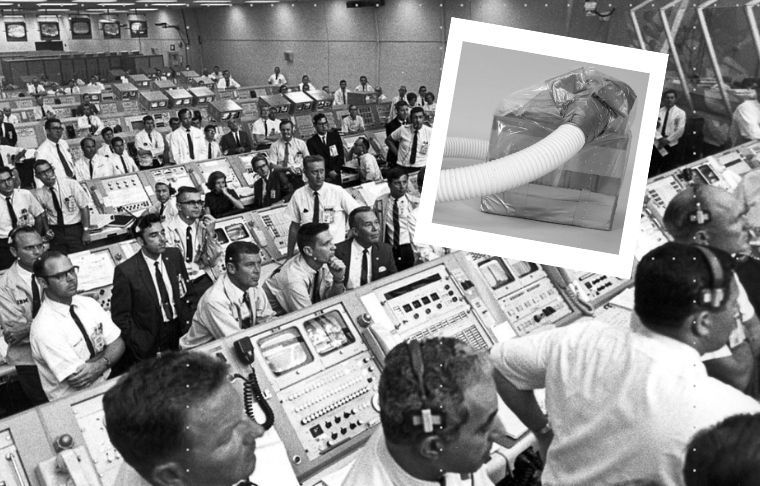
Engineers adapted equipment, rewrote procedures, and devised solutions under extreme time pressure. The lunar module was repurposed as a lifeboat, power-down procedures were developed to stretch limited electrical reserves, and square carbon-dioxide filters were adapted to fit into round receptacles using plastic bags, cardboard, and tape. These solutions were developed in real time, but they were not arbitrary.
Each adjustment had to fit within the architecture of the spacecraft and the trajectory guiding the astronauts back to Earth. The system constrained those adjustments even as it enabled them.
The same dynamic applies in business transitions. As time passes, new information and risks emerge, forcing adjustments that were never part of the original plan. In response, buyers propose new structures, financing terms shift, and tax strategies evolve over the course of negotiations. An owner must make decisions within that shifting landscape, often with incomplete information and limited time to respond.
Those decisions are necessarily improvisational, but they succeed only when they occur within a system that has already been constructed.
The Real Lesson of Apollo 13
The engineers who guided Apollo 13 back to Earth understood something fundamental about complex systems.
The mission required thousands of actions, each of which had to be sequenced properly. But sequence alone was never enough. The spacecraft had been designed as an integrated system long before launch, and when the unexpected occurred, the in-flight adjustments worked because they fit within that system.
Business transitions follow a similar arc. Sound architecture must exist before the process begins. Specialists must be integrated around a common plan. Decisions are evaluated in the context of the whole. And when circumstances inevitably shift, the improvisation that follows must still serve the broader strategy.
There may indeed be a thousand steps.
Success depends on whether they are all part of the same system.
© 2026 Stuart A. Smith III. All rights reserved.