
The Dowding System
The Pattern Only Appears at Altitude
by Stuart A. Smith III
In the early days of the Second World War, the Royal Air Force faced a monumental task — defending their island home against a numerically superior force. The challenge was compounded by fragmented visibility. Scattered radar stations could only detect incoming aircraft along their stretch of coastline. Fighter pilots could only engage the aircraft they saw. By default, the first line of defense experienced individual fights. Headquarters needed to understand the broader battle.
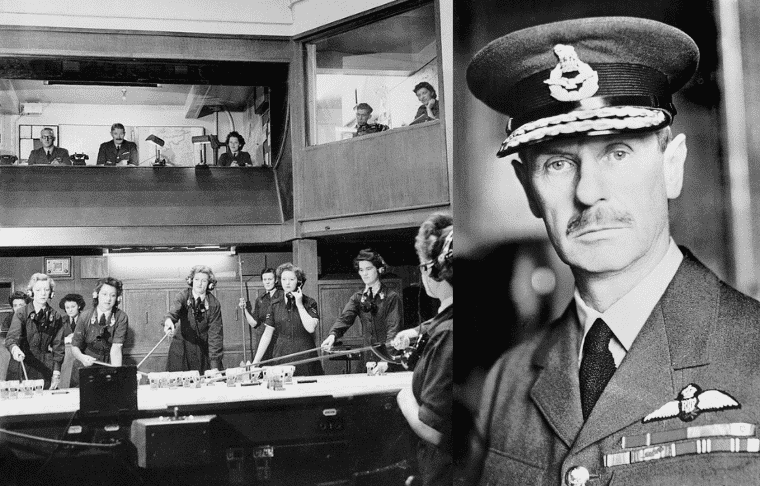
British Air Marshal Hugh Dowding solved that problem with what became known as the Dowding System — an integrated command-and-control network that combined information from radar stations, ground observers, pilots, and operational commands into a picture no individual could see on their own. That consolidated view allowed headquarters to understand what was developing across the entire theater of operations.
Wealth management firms often face a remarkably similar challenge.
Individual advisors naturally experience client matters one relationship at a time. A succession discussion surfaces during a review meeting. A business owner mentions unsolicited buyer interest. Estate planning conversations begin intersecting with liquidity planning. Viewed individually, each development appears in isolation.
Viewed across an enterprise, a different picture emerges because business-owner transition conversations are almost certainly underway somewhere within a wealth firm’s client base at any given time.
Over more than two decades at M&T and Wilmington Trust, I observed the same dynamic repeatedly: business-owner transitions arise only periodically for the individual advisor. At an enterprise level, however, they are a natural and recurring aspect of serving business owners. The resulting gap between local experience and enterprise visibility can make it difficult to convert isolated observations into actionable insight. Conversations with wealth management firms over the past year have only reinforced that observation.
The difference lies in perspective. What appears isolated at the front line is typically a broader pattern when viewed from above. Recognizing the pattern, however, is only the first step.
The Dowding System did not diminish the importance of the front line. Radar operators, ground observers, and fighter pilots remained essential. In many respects, the system made them more effective. Their observations became part of a larger framework that allowed British leadership to concentrate resources at key points across a wide front.
Wealth management firms face a similar reality. True enterprise visibility does not begin in a conference room or a reporting system. It begins when advisors recognize the early signals of a business-owner transition, note their likely significance, and relay those observations so they can become part of an organizational understanding and response. That process depends on more than communication. It requires advisors to recognize when seemingly routine conversations could be pointing to something deeper.
The significance of these developments often extends well beyond a potential transaction. Succession planning, liquidity events, and ownership transfers inevitably intersect with estate planning, tax strategy, family governance, risk management, and long-term wealth planning. What begins as a seemingly isolated client comment can have implications that extend across multiple disciplines within a firm.
In my recent work with several wealth management leaders, I have found that the most effective firms don’t necessarily have the most resources. Instead, they are adept at recognizing transition activity early and ensuring advisors have access to the resources necessary to support clients before opinions become entrenched. Clients gain access to planning and expertise sooner. Advisors can engage more thoughtfully around issues that are central to a business owner’s future. Firms can coordinate resources and influence outcomes before key decisions, assumptions — and new voices — begin to shape the direction of the conversation.
The value of the Dowding System wasn’t simply that it provided a fuller picture. It provided the picture sooner. Radar stations could identify incoming aircraft long before they were visible from the ground. That early warning gave British leadership time to allocate resources, coordinate responses, and make decisions before enemy aircraft forced the issue. The system did not create new information. It connected disparate observations to reveal what was taking shape before it became obvious to individual participants.
Wealth management firms already see many of the signals. The question is whether those signals remain isolated, or become part of a broader understanding that can drive action.
The first line of defense will always experience individual fights. Leadership’s challenge is to see the developing battle while there is still time to affect its course.
© 2026 Stuart A. Smith III. All rights reserved.