
When the Plan Meets the Clock
Decision Discipline in a Business Transition
by Stuart A. Smith III
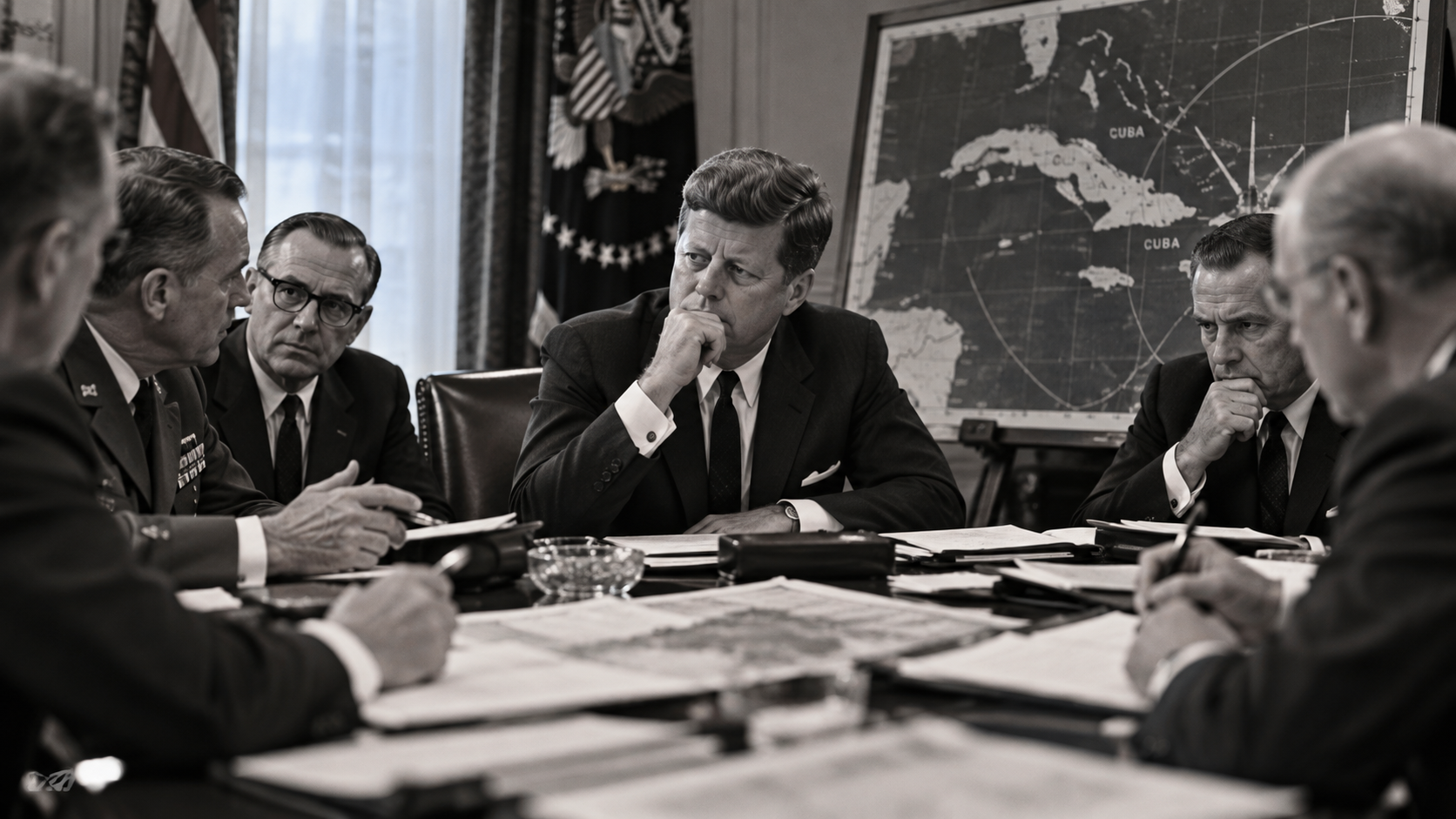
In October 1962, President John F. Kennedy learned that the Soviet Union was installing nuclear missiles in Cuba. The discovery demanded action. It did not make the right action obvious.
Kennedy gathered military leaders, diplomats, and intelligence officials to help determine what should happen next. Each brought extraordinary experience, but each also viewed the crisis through a different professional lens. The military emphasized eliminating the threat before it became operational. Diplomats focused on avoiding a conflict that could spread beyond Cuba. Intelligence officials concentrated on separating what was known from what remained uncertain.
None of those perspectives was wrong. Each reflected a different dimension of the same problem.
As the crisis unfolded, Kennedy faced a series of decisions that could not be considered independently. Every choice affected the choices that remained. Military action might eliminate diplomacy. Delay might increase the threat. Each recommendation carried consequences well beyond the immediate concern of the advisor making it. The challenge was no longer deciding what to do. It was managing a decision process in which every step shaped the next.
Kennedy’s challenge was not deciding which expert to trust. It was integrating those perspectives into a strategy that best served the broadest interests of the nation.
The Parallel
At first glance, the Cuban Missile Crisis has little in common with transitioning a privately held business. One involved the prospect of nuclear war. The other involves valuation, financing, taxes, legal agreements, and family decisions.
Yet a common leadership challenge lies beneath those obvious differences.
Business owners can spend years preparing for a transition. Then execution begins. A buyer requests exclusivity. An investment banker proposes a timetable. An attorney identifies a legal risk. An accountant recommends a tax structure. A lender defines what can be financed. Family members form different views of the outcome.
Owners suddenly find themselves surrounded by highly capable professionals offering recommendations that are entirely reasonable—within their respective disciplines. The problem is not a lack of expertise. It is that execution creates momentum, and each decision begins narrowing the range of decisions that can follow.
Kennedy’s experience points to three principles that become especially important when a business transition moves from planning to execution.
Integrate Expertise
Every advisor approaches the same problem from a different vantage point. Military leaders focused on eliminating the immediate threat. Diplomats weighed the risk of a wider conflict. Intelligence officials assessed Soviet capabilities and intentions. Each recommendation reflected the responsibilities of the person making it.
Business transitions create the same dynamic. Investment bankers stress value and competitive tension.
Attorneys manage legal exposure. Accountants seek tax efficiency. Lenders focus on financeability.
Wealth advisors emphasize the owner's long-term financial objectives. Each recommendation may be entirely correct within its own professional lane. The owner's objective, however, is broader than any one discipline. It may encompass value, family, employees, taxes, liquidity, legacy, future control, and the opportunities that remain after the transaction closes.
Execution therefore depends on more than assembling capable advisors. It requires a perspective that sits above any single discipline—one that is sufficiently informed to understand the implications of each recommendation, sufficiently removed from any one discipline to evaluate them dispassionately, and
continually focused on whether the decision process remains aligned with the owner's objectives.
Preserve Optionality
Some decisions quietly close off paths that might otherwise remain open. Kennedy's decision to impose a naval quarantine was important because it preserved freedom of action. It applied immediate pressure without forcing an irreversible military commitment. If circumstances changed, the United States could still negotiate, escalate, or pursue another course. An immediate air strike would have left far fewer choices available.
Business transitions contain their own irreversible commitments. Granting exclusivity, selecting a transaction structure, releasing confidential information, or announcing a transaction before the organization is prepared may all become appropriate steps.
The critical question is not simply whether those decisions should be made. It is when they should be made.
Each commitment changes the owner's leverage and narrows the alternatives that remain. Sometimes making a commitment is precisely the right move. At other times, a decision can reflect the momentum of the process rather than the owner's objectives.
Optionality is rarely lost through one dramatic mistake. More often, it disappears one reasonable decision at a time. Someone must continually ask not only whether today's recommendation is sound, but also what choices it quietly removes from tomorrow.
Control the Sequence
Decision sequencing is itself a strategy. Kennedy understood that a military strike could still follow a naval quarantine. The reverse was far less likely. By beginning with a course of action that preserved additional choices, he created time for diplomacy without abandoning the possibility of escalation.
Business transitions follow the same logic.
Testing the market before granting exclusivity preserves negotiating leverage that may be impossible to recreate later. Evaluating strategic alternatives before selecting a transaction structure prevents the structure from driving the strategy.
Clearly defining the transaction before developing a financing structure typically yields a better financing solution than allowing financing constraints to determine the transaction itself. Preparing employees before announcing a transaction reduces disruption.
Each of those decisions must be sound on its own, but their order matters because every step establishes context for the next.
That sequence rarely belongs to any one advisor. Each professional appropriately advances the work within their discipline. Yet the process still requires an informed and dispassionate perspective—one focused on the overall progression and whether today's decision strengthens or weakens the owner's position tomorrow.
The Enduring Lesson
Over sixty years later, the Cuban Missile Crisis is remembered for bringing the world to the precipice of nuclear war. The underlying leadership challenge was far more ordinary.
Leaders in every field eventually confront situations in which capable experts offer different recommendations, events accelerate, and each decision shapes the path forward. Business transitions are no exception.
Most owners assume that if they assemble an outstanding advisory team, the decision process will naturally remain coordinated—or that they themselves will provide the perspective that keeps it so. For much of the process, that may work. But as execution accelerates, owners can find themselves navigating unfamiliar terrain alongside professionals who operate in it every day—and the personal stakes only make objectivity more difficult.
That is when a detached and informed perspective becomes particularly valuable—integrating expertise,
preserving optionality, and consciously managing sequence. In the end, transactions are remembered for their outcomes—and those outcomes are often determined long before closing, one decision at a time.
© 2026 Stuart A. Smith III. All rights reserved.